Machine learning in physical optical systems
How can we integrate machine learning algorithms into the study and control of complex physical optical systems?
Success message
Error message
How can we integrate machine learning algorithms into the study and control of complex physical optical systems?
Physical systems often involve numerous parameters and variables, resulting in increased complexity and high dimensionality. A crucial step in analyzing such systems is to represent their data in a latent space, which effectively reduces the number of "knobs" or underlying variables, simplifying analysis and control.

By leveraging latent space representations, we can enable either human intuition or a neural network to more effectively comprehend experimental data and guide us toward our objectives. Furthermore, directly studying real-world data (rather than solely relying on simulations) is crucial for overcoming the persistent and well-known data mismatch between artifical simulation data and experimental observations.

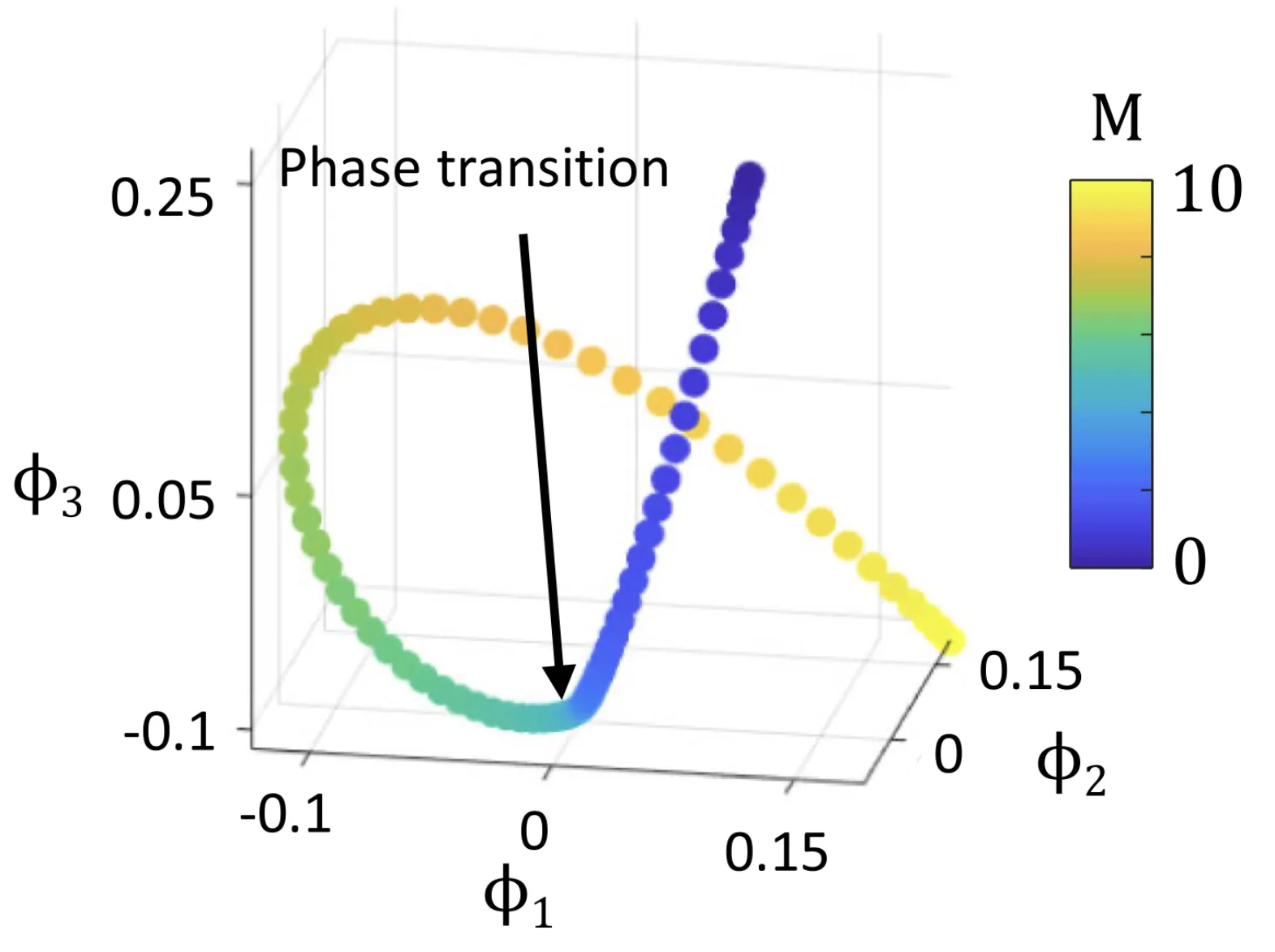
We showed how diffusion maps can enable detection of phase transition based real data from physical optical systems. E. Lustig*, O. Yair*, R. Talmon, and M. Segev, Phys. Rev. Lett. (2020) Press article in physics world
and in quantum many body systems: Ron Ziv, et al, Unsupervised Machine Learning for Experimental Detection of Quantum-Many-Body Phase Transitions,arXiv preprint arXiv:2512.01091 (2025)
see also our recent work on Generative neural networks for Kerr combs: Janet Zhong, Eran Lustig, et al, Generative Neural Networks for Kerr Combs, Workshop at the 36th conference on Neural Information Processing Systems (NeurIPS), (2025)